
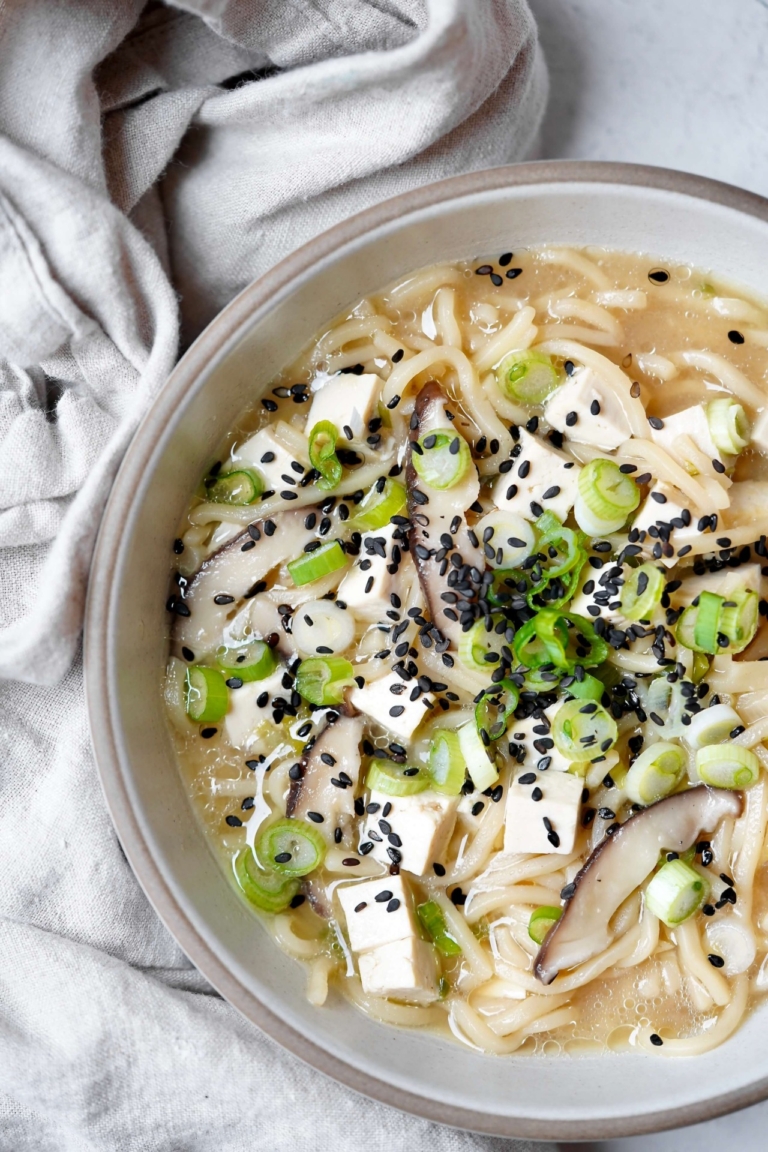
Miso ramen is the kind of bowl you crave before you even know you need it. Savory miso melts into a rich, steamy broth; tender noodles tangle with earthy mushrooms; scallions and black sesame add just enough bite and nuttiness to keep things interesting. It’s comforting, layered, and deeply satisfying. What began as a simple Japanese staple has become a global favorite, celebrated for its versatility and soul-soothing depth. Let’s take a quick look at its origins, adaptability, and a few surprising health perks.
Origin of Ramen
Ramen originated in China but was embraced and transformed by the Japanese into the iconic dish we know today. It gained popularity in Japan after World War II when it became an affordable and convenient meal option. Since then, ramen has evolved with regional variations and unique styles, including the famous miso ramen. My family and I traveled to Japan a few summers ago, and hearty, flavorful bowls of ramen were prominent throughout the areas we traveled.
Miso
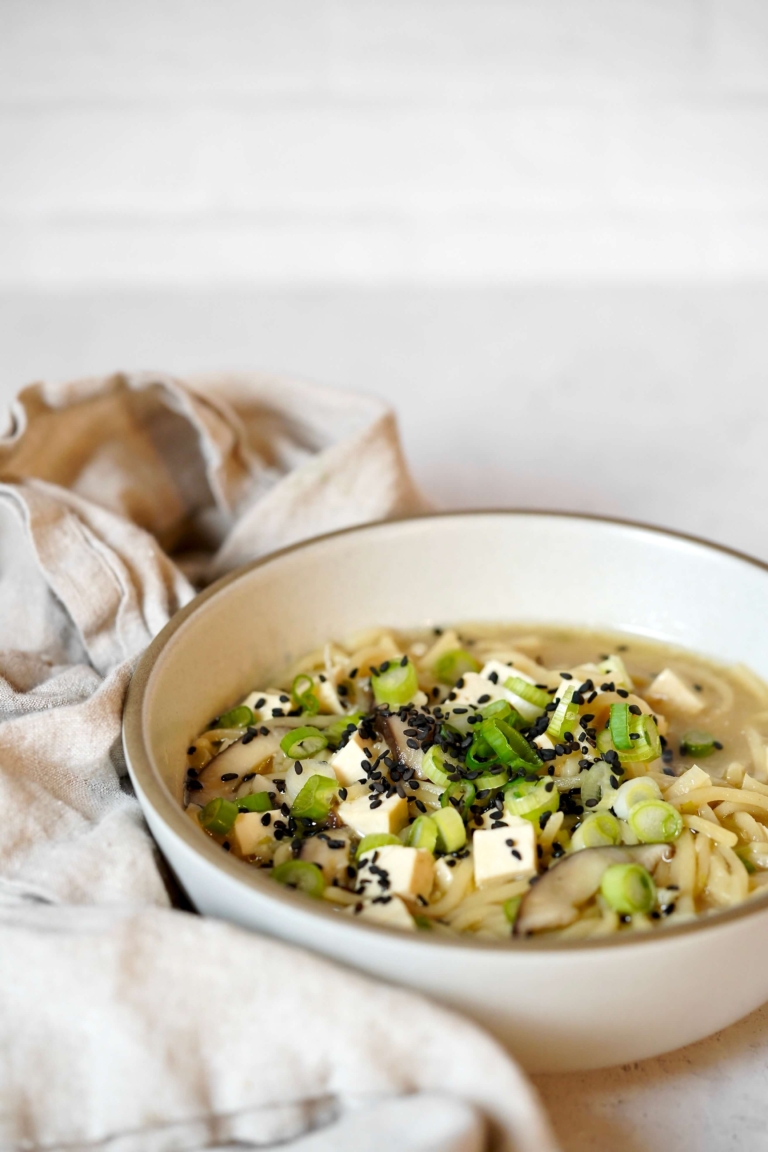
Miso is a fermented soybean paste, and the star ingredient in this miso ramen soup recipe. Miso not only adds a deep, savory flavor but also provides several health benefits. Most don’t know, but miso is rather rich in probiotics, which promote a healthy gut and support digestion. It is also a good source of essential minerals, vitamins, and antioxidants.
Noodles
When it comes to ramen noodles, there are two main types: fresh and dry. Fresh ramen noodles have a springy texture and are often made with wheat flour and alkaline water. Dry ramen noodles, on the other hand, are pre-cooked and dehydrated. While both have their merits, fresh noodles tend to have a more delicate and satisfying mouthfeel.
One of my favorite things about this miso ramen soup recipe is that it allows for endless customization and toppings. From slices of tender pork and soft-boiled eggs to scallions, seaweed, and bamboo shoots, which allows you can create a personalized bowl of comfort that suits your taste preferences. Spice-wise, there are no limits. I like to swirl chili-garlic sauce in for an easy added kick.
Umami
The concept of umami was identified in 1908 by Japanese scientist Kikunae Ikeda, who discovered that glutamate — a naturally occurring amino acid — is responsible for that deeply savory taste. Glutamate is found in foods like tomatoes, soy sauce, miso paste, mushrooms, aged cheeses (especially Parmesan), and cured meats. In other words, many of the ingredients that make this miso ramen so satisfying are naturally packed in it.
Our taste buds have specific receptors that detect glutamate, signaling to the brain that we’re experiencing umami — now recognized as the fifth basic taste alongside sweet, sour, salty, and bitter. The word “umami” translates to “pleasant savory taste,” but it’s more than that. It adds depth, roundness, and balance, making flavors feel fuller and more complete.
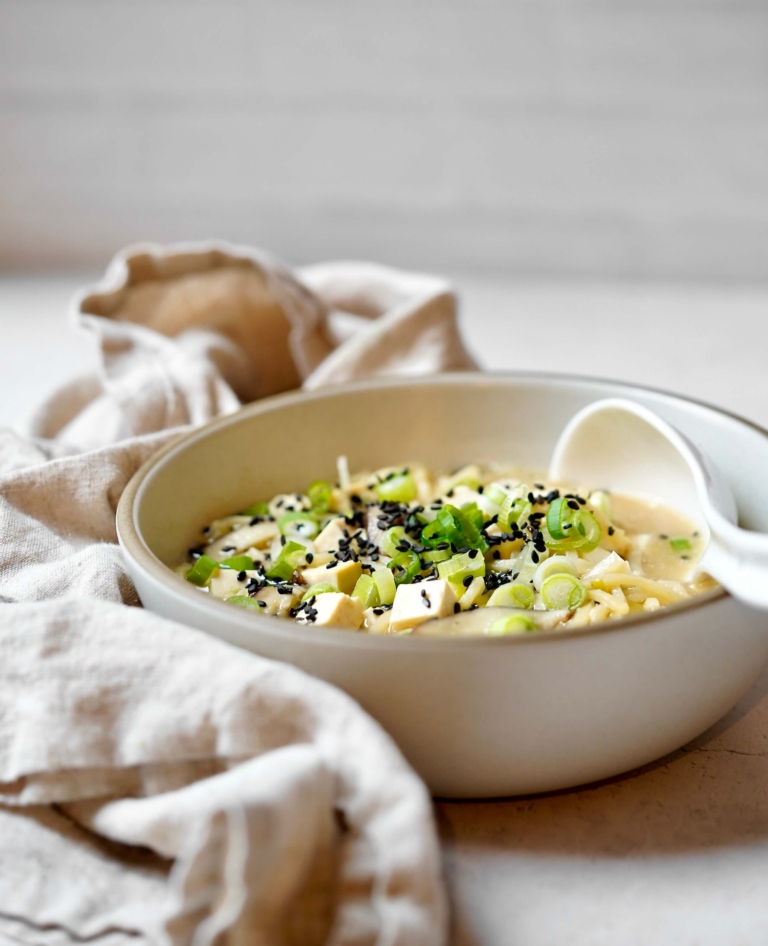
That’s exactly what’s happening in this bowl. The miso paste enriches the broth with fermented complexity, the mushrooms reinforce its earthy savoriness, and any additional ingredients layered into the soup build upon that glutamate foundation. Each component works together, creating a harmony of flavor rather than one dominant note.
While umami is a Japanese term, it isn’t limited to Japanese cuisine — it’s the backbone of great cooking around the world. In this simple miso ramen, though, you can taste it clearly: a comforting, layered savoriness that makes every spoonful feel deeply nourishing and just a little irresistible.
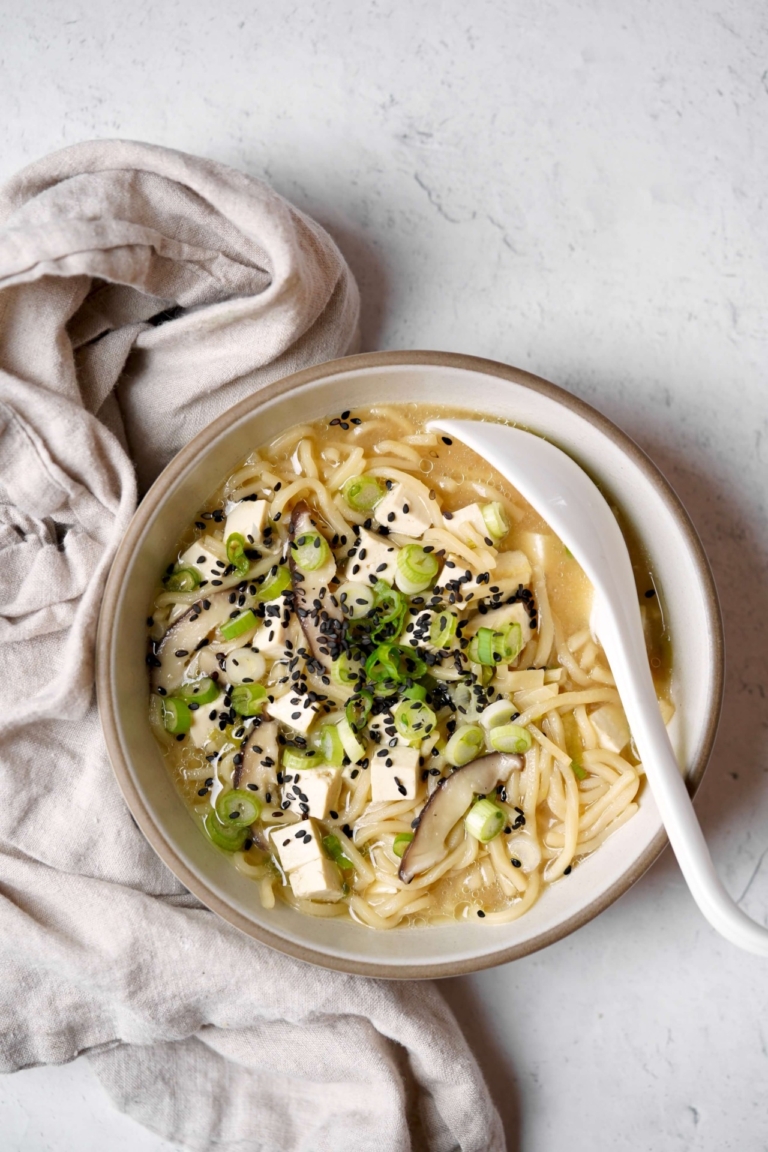
Miso Ramen Soup

Ingredients:
- 1/4 cup canola oil
- 6 ounces shiitake mushrooms, stemmed and thinly sliced
- 1/2 cup scallions, thinly sliced
- Kosher salt and black pepper to taste
- 1/3 cup white miso paste
- 2 Tablespoons low-sodium soy sauce
- 2 cups firm tofu, small dice
- 1 pound fresh ramen noodles
- 3 Tablespoons toasted sesame oil
- 2 Tablespoons black sesame seeds
- 1 teaspoon fresh ginger, grated
Directions:
- Place a large sauce pot over medium-high heat. Add two tablespoons of oil, and when hot, add the mushrooms and half of the scallions. Season to taste with salt and pepper and cook, stirring occasionally, until softened, about 2 minutes. Reduce the heat and add the miso and soy sauce. Cook, stirring constantly, until the mushrooms have absorbed the liquid and the miso is caramelized and golden brown, about 2 minutes.
- Add 7 cups of water and bring to a boil over high heat, stirring to dissolve the miso. Partly cover, reduce the heat to medium, and simmer until mushrooms are tender and broth is slightly reduced, about 15 minutes. Season to taste with salt and add the tofu.
- Bring a large saucepan of water to a boil, and cook the ramen noodles according to package instructions. Drain and immediately divide among 4 bowls.
- Combine the remaining scallions, remaining 2 tablespoons of oil, sesame oil, sesame seeds, and ginger in a small bowl, and season with salt. Mix well.
- Divide the broth among the bowls. Drizzle each with some of the sesame-ginger sauce, and serve warm.

Beautiful images and very tasty recipe!!!