
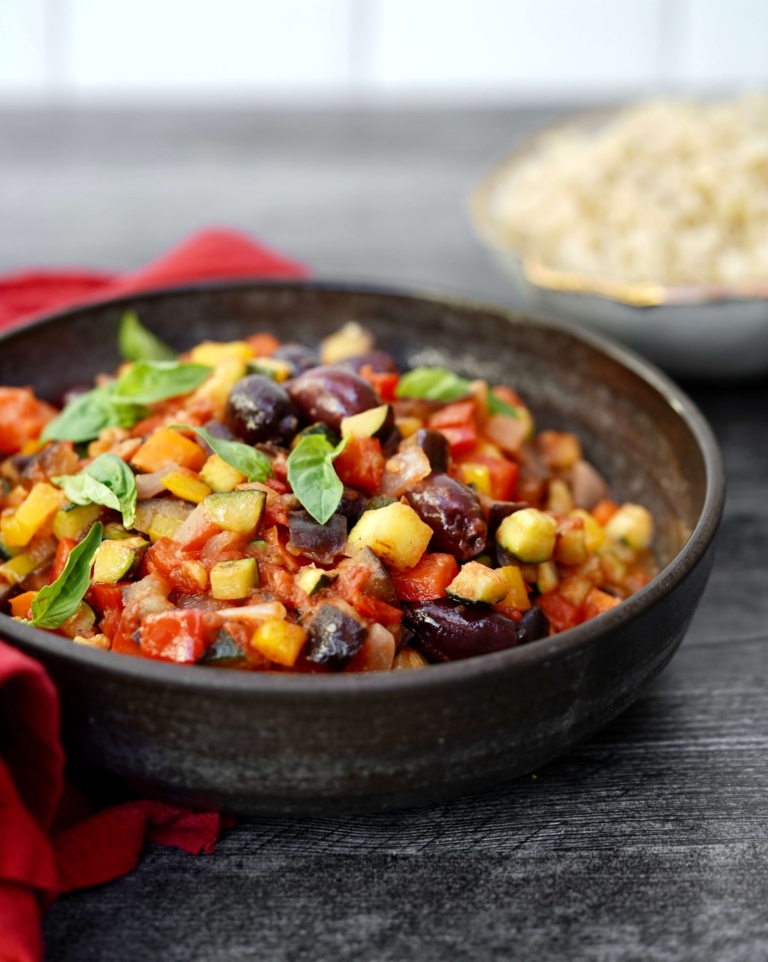
Ratatouille is one of those timeless dishes that captures everything we love about Provençal cooking. At its core, it’s a simple vegetable stew—eggplant, zucchini, tomatoes, and onions—humble ingredients that reflect its roots as a peasant dish from Nice, France. But don’t be fooled by its simplicity. When given care and attention, ratatouille transforms into something deeply flavorful, hearty, and undeniably elegant.
My version has a little twist: briny olives. They add a punch of flavor and, perhaps more importantly, won over the younger eaters in my house when I began making this dish for them years ago. Sometimes called ratatouille niçoise, this dish has become one of the true jewels of southern French cuisine. I don’t remember my very first bite, but I do know I’ve been smitten ever since. Serve it as a main course with crusty bread or alongside roasted meats, and it always holds its own.
Ratatouille, in many ways, feels personal to me-it distantly connects me to a heritage I only brush against. My maiden name, for instance, has French roots, though technically French Canadian. That may be the closest tie I have to France itself, but my admiration for French cuisine runs deep–it’s timeless, soulful, and endlessly inspiring. With French cooking enjoying a modern revival, ratatouille stands as a shining example of why these classics endure.

The Secret Is in the Technique
Like so many great French dishes, technique makes all the difference. Larousse Gastronomique—the culinary bible—insists that each vegetable in ratatouille should be cooked separately, and I couldn’t agree more. I learned this trick years ago from a French cook, and I’ve never looked back. Another non-negotiable? High-quality olive oil. It’s not just there to cook the vegetables—it’s part of the flavor.
The biggest mistake people make with ratatouille (and vegetable dishes in general) is throwing everything into the pan at once. Vegetables don’t cook at the same pace; their textures and water content vary. Cook them all together and you end up with a watery, overcooked mess. Take eggplant, for example. It’s notorious for being tricky, but that’s usually because it’s treated poorly. Salt and drain it first, then cook it over high heat, and it becomes rich and velvety instead of spongy. Zucchini, on the other hand, is delicate—it cooks fast and needs a gentler touch. And here’s another golden rule: don’t overcrowd the pan. It may seem like a time-saver, but too many vegetables piled together trap steam and create mushy vegetables.

Working in batches takes more time, yes—but the payoff is a beautiful, complex dish that honors each ingredient. I like to serve it over whole wheat pearl couscous, which soaks up the juices beautifully. It also makes a fantastic side for grilled meats, fish, or roast chicken. And if you have leftovers, trust me: topped with a poached farm egg for breakfast, it’s divine.
Ratatouille is more than just a vegetable stew—it’s proof that with good ingredients and a little patience, simple food can feel extraordinary. It’s a dish that celebrates both tradition and creativity, and one that deserves a place in any kitchen. So whether you’re cooking it for a weeknight dinner or as part of a special meal, this Provençal classic will remind you why French cooking never goes out of style.

Ratatouille

Ingredients:
- 1 medium red onion, 1/2-inch dice
- 6 cloves of garlic, minced
- 3 medium Japanese eggplant, skin on, cut into 1/2-inch dice
- 4 small/medium green squash, cut into 1/2-inch dice
- 6 yellow pattypan squash, cut into 1/2-inch dice
- 2 medium sweet red bell peppers, deseeded and cut into 1/2-inch dice
- 2 cups, fresh chopped tomatoes and juice, or one (14-ounce) can of diced tomatoes, in juice
- 3/4 cup kalamata olives
- 4 tablespoons good-quality Extra virgin olive oil, divided, plus additional, if needed
- 3/4 teaspoon Kosher salt
- Freshly ground back pepper to taste
- 1/4 cup fresh basil leaves, for garnish
Directions:
- Place the diced eggplant into a colander and place it in the sink. Add a teaspoon of salt and, using your hands, gently toss to coat. Let it sit, staring occasionally for 15-20 minutes to help drain the moisture from the eggplant.
- While the eggplant is draining, start cooking the other vegetables. In a large sauté pan, add 1 tablespoon of olive oil and place over medium-high heat. When hot, but not smoking, add the onions and sauté till soft, about 4 minutes. Add the minced garlic and cook for an additional 1 minute. Remove from the heat and place the onion-garlic mixture into a large mixing bowl and set aside.
- Place the same pan back on the heat and add another tablespoon of olive oil. When hot, add the peppers and sauté till tender, about 2-3 minutes. Place the peppers into the bowl with the onions.
- Return the pan to the stove and add the 3rd tablespoon of olive oil. Add the yellow and green squash and sauce till you begin to see some nice coloration, about 5-6 minutes. Remove from the heat and add to the other cooked vegetables.
- Place the pan back on the stove and add the last tablespoon of olive oil to the pan. When hot, add the eggplant and cook, stirring frequently, until you begin to see coloration, about 4-5 minutes. Add a small amount of additional oil if the eggplant absorbs all the oil and sticks to the bottom of the pan.
- Add all the reserved cooked vegetables to the pan with the eggplant, plus the chopped tomatoes (and juices), salt, and some black pepper to taste. Reduce the heat to medium-low and cook, uncovered, stirring occasionally, for an additional 8-10 minutes. Remove from the heat, stir in the olives, and taste and adjust the seasoning as needed.
- To Serve: Place the ratatouille in a large serving bowl and garnish with fresh basil leaves.