
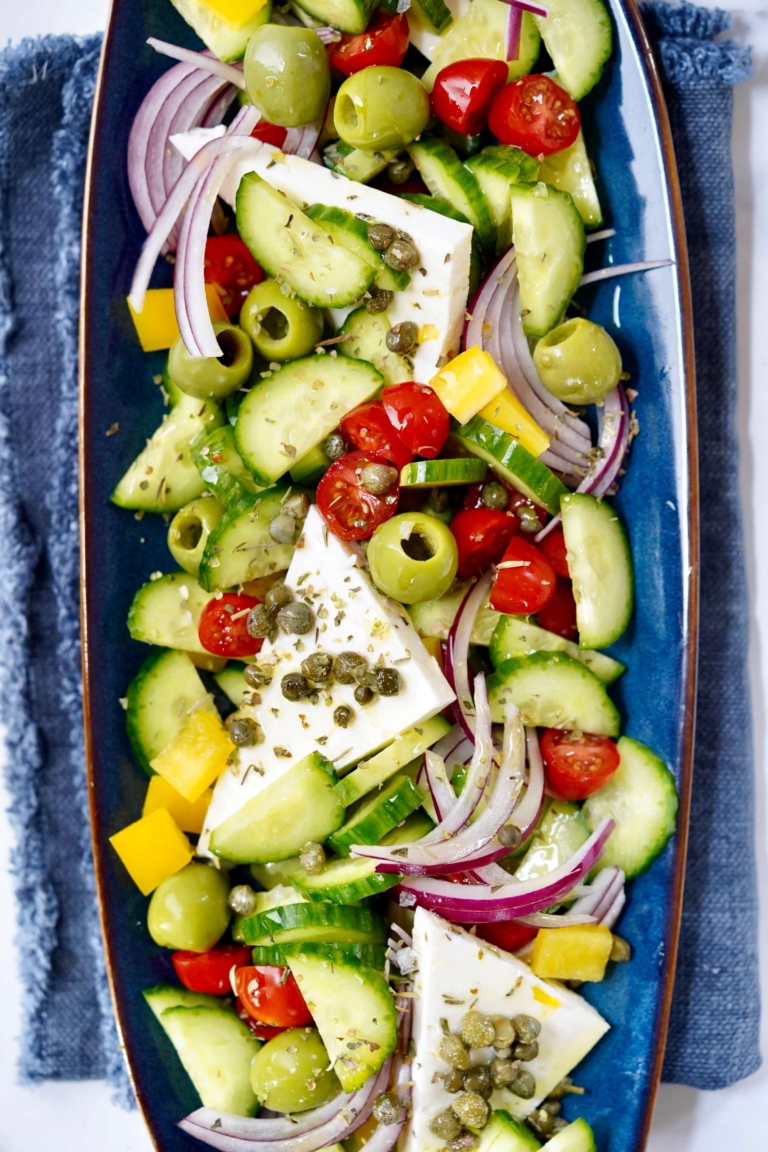
Greek salad—known in Greece as Horiatiki, or “village salad”—is a dish built on simplicity, not spectacle. It emerged in the mid-20th century as an everyday meal, made from ingredients commonly found in Greek homes and gardens during the warmer months. This wasn’t a salad created to follow trends; it was created because it made sense. Fresh vegetables, good cheese, olive oil, and very little else.
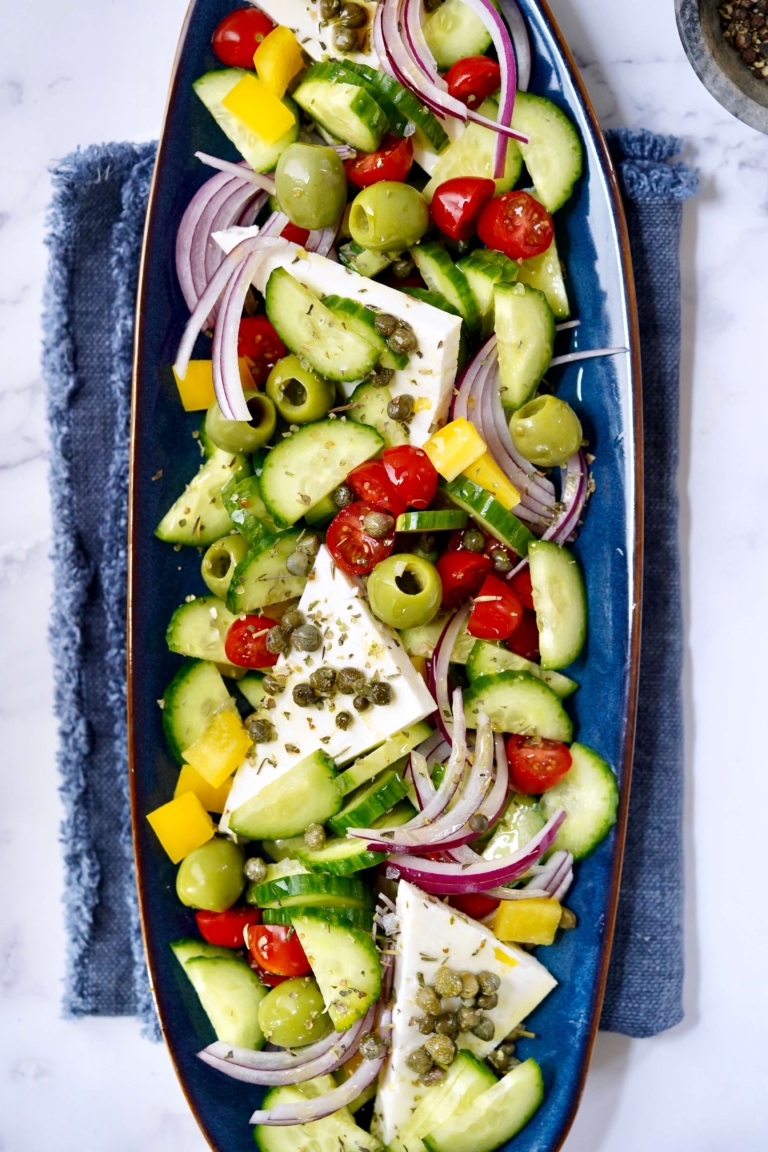
A traditional Horiatiki includes ripe tomatoes, crisp cucumbers, sliced red onion, briny olives (most often Kalamata), and a slab of feta placed right on top rather than mixed in. Dried oregano, salt, and a generous pour of extra virgin olive oil finish the dish, sometimes with a small splash of red wine vinegar. Notably absent is lettuce (that is an American addition)—this salad relies on the vegetables themselves for structure and freshness.
Village Greek Salad
One of the reasons Greek salad has remained so popular, especially outside of Greece, where it’s often called “village Greek salad,” is how effortlessly it comes together. There’s no cooking involved and no complicated preparation. Everything is raw, fresh, and assembled in minutes, making it ideal for warm-weather meals or as a reliable side that never feels like an afterthought.
From a nutritional standpoint, Greek salad fits squarely into the Mediterranean diet, which is often praised for its focus on whole foods and healthy fats. The vegetables provide fiber and hydration, the feta adds protein and richness, and the olive oil delivers heart-healthy fats that help bring the entire dish together. It’s filling without being heavy and flavorful without relying on excess seasoning.
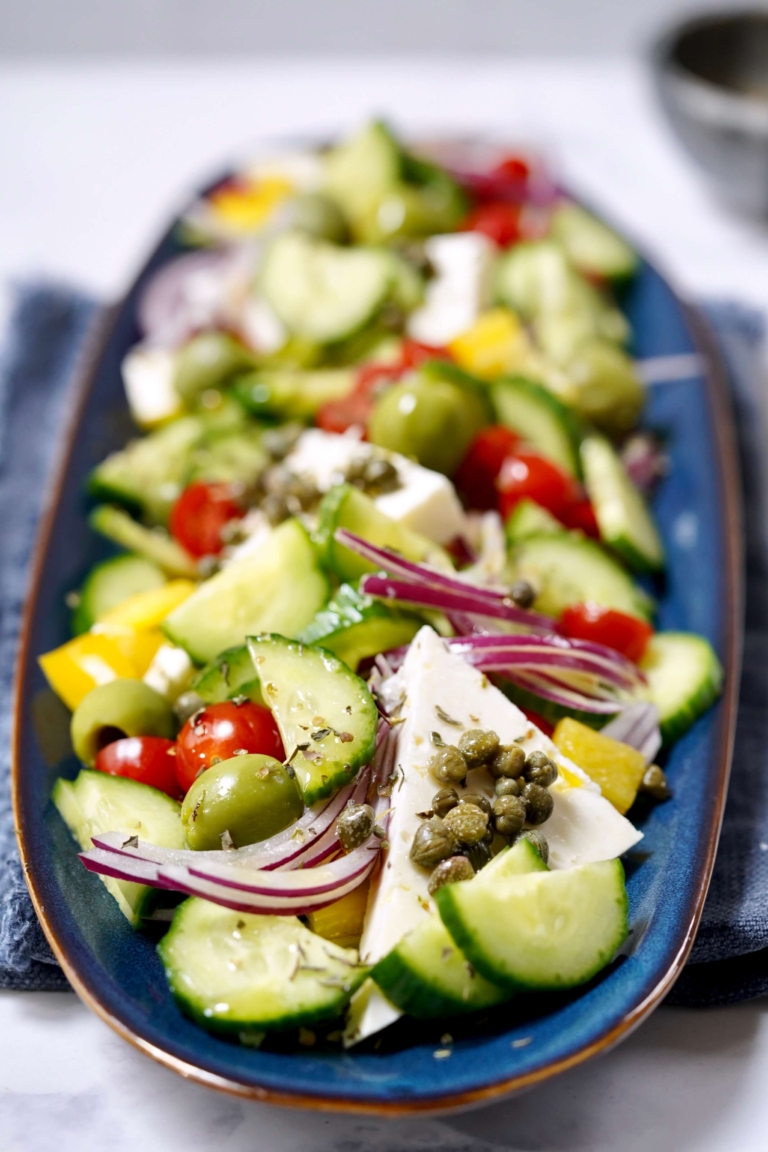
While the classic version is hard to beat, there’s room for small, thoughtful substitutions. Kalamata olives are traditional, but other briny olives work just as well. I tend to prefer Castelvetrano olives for their mild, buttery flavor, which pairs nicely with the acidity of the tomatoes and the saltiness of the feta. As with any simple dish, ingredient quality matters—especially the olive oil. Greek extra virgin olive oil, typically made from Koroneiki olives, is the standard here. Its grassy, slightly peppery profile adds depth and balance, and in a salad this minimal, it truly makes a noticeable difference.
Greek salad is proof that good ingredients don’t need much intervention. When everything is fresh and well chosen, the result is a dish that feels both timeless and completely at ease on the table.
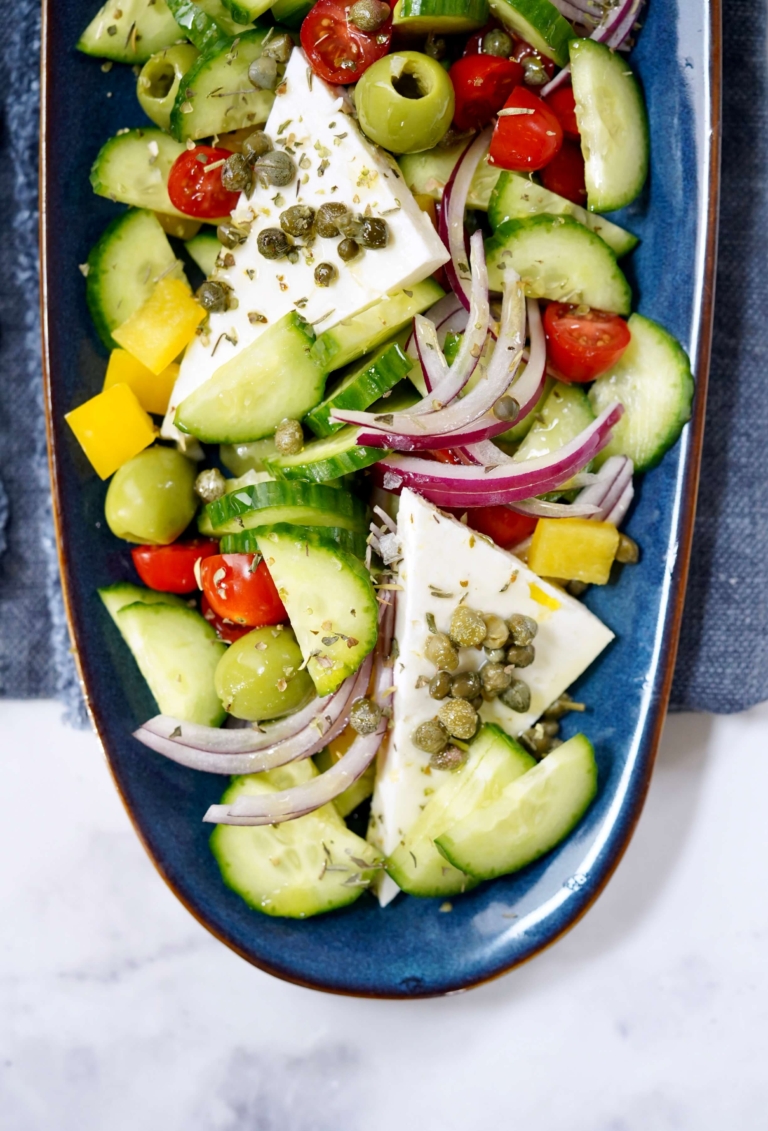
Greek Salad "Horiatiki"

Ingredients:
- 6 ounces red grape tomatoes, cut in half
- 1 hothouse cucumber unpeeled, sliced lengthwise and cut into 1/2-inch slices
- 1 medium yellow or green pepper, deseeded, and cut into bite-size pieces
- 1/2 cup red onion, thinly sliced
- 1/3 cup pitted Castelvetra or Kalamata olives
- 4 ounces of good-quality sheep's milk Greek feta, cut into large triangles, not crumbled
- 2 tablespoons good quality Extra virgin olive oil
- 1 1/2 tablespoons red wine vinegar (optional)
- 1/2 teaspoon dried oregano
- 1/2 teaspoon Kosher salt
- 2 tablespoons capers, drained
Directions:
- In a large bowl, add the tomatoes, cucumber, pepper, onion, and olives. Toss to combine. Transfer to a serving platter.
- Top with the feta cheese. Drizzle with the olive oil and vinegar, if using. Season with oregano and salt, and sprinkle with capers.