
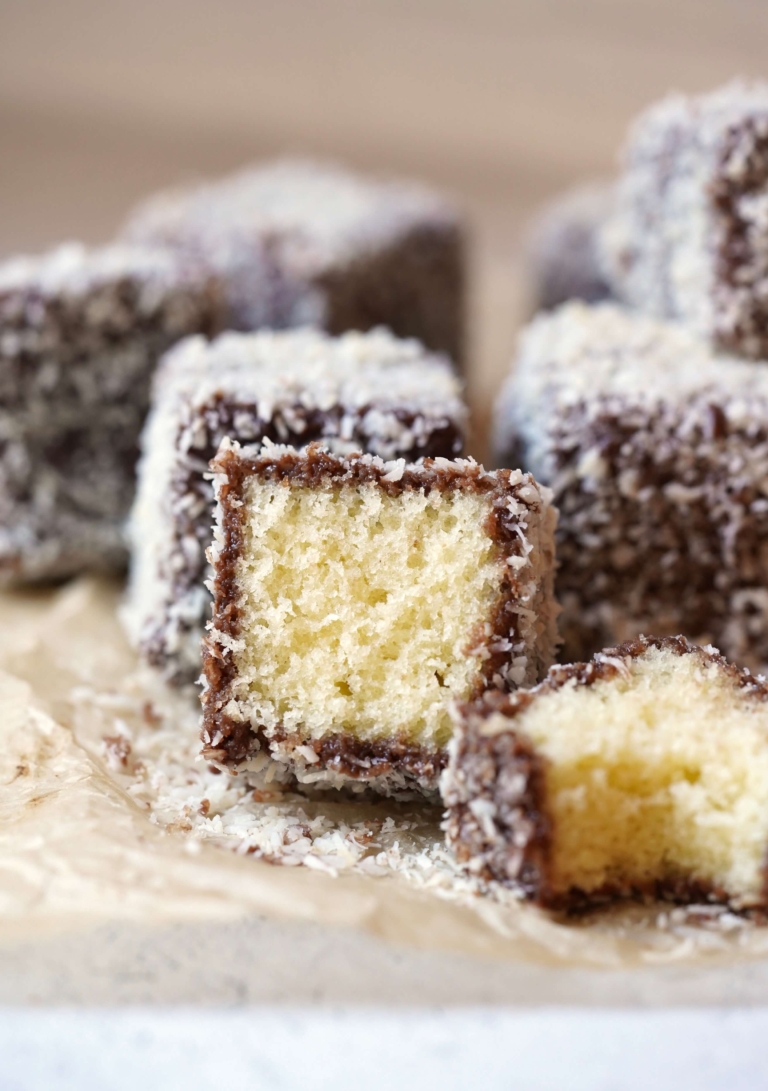
If you’ve never had a lamington, allow me to introduce you to one of Australia’s most beloved desserts. A classic lamington is made from squares of light vanilla sponge cake, dipped in a rich chocolate coating, and rolled in finely shredded coconut. Simple? Yes. Swoon-worthy? Absolutely. Made with three of my favorite things—sponge, chocolate, and coconut—it’s no surprise that lamingtons have quickly become a personal favorite despite never traveling to Australia.
Though traditionally served plain, many Australian bakeries give this treat a delightful twist by filling them with jam (typically raspberry or strawberry), whipped cream, or even both. The result? A more indulgent version of the humble original that’s perfect for a special occasion—or whenever you need a little extra comfort.
When to Eat Lamingtons
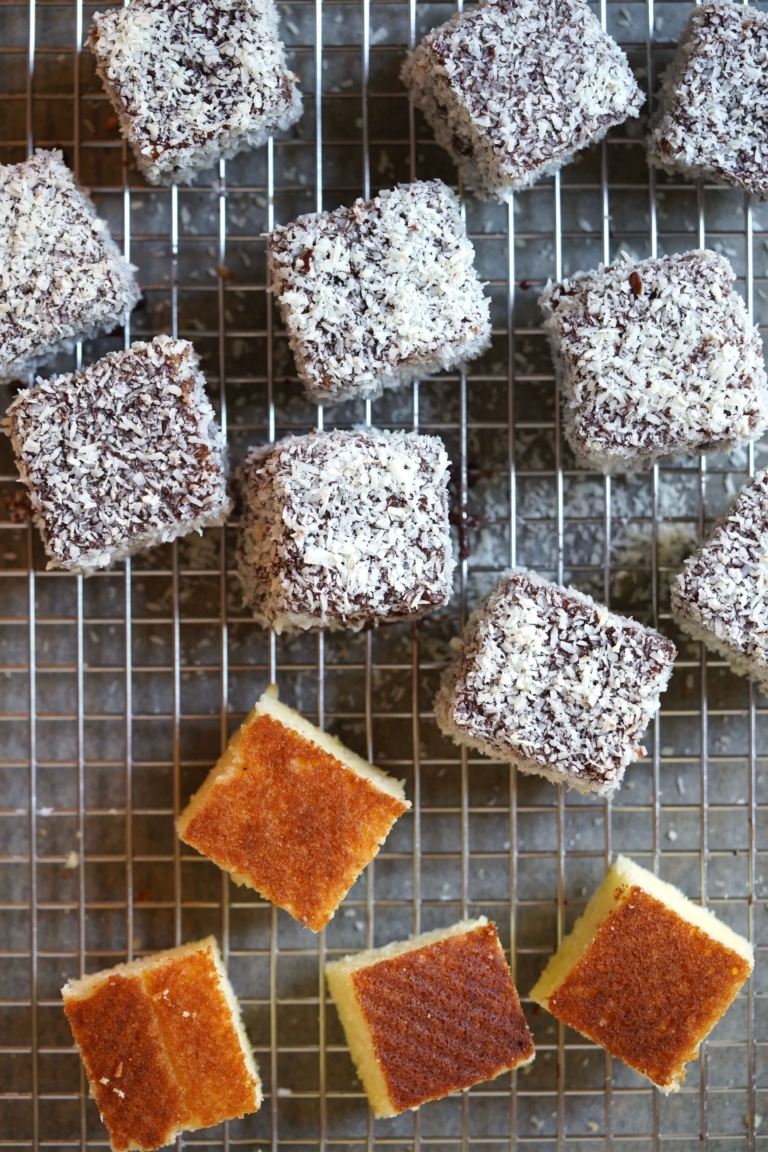
While lamingtons enjoy iconic status year-round, they’re especially popular on Australia Day (January 26) and National Lamington Day (July 21). That said, Aussies don’t wait for a holiday to indulge; nor should you. Lamingtons are a regular fixture in home kitchens, school lunchboxes, and bakery displays throughout the year. They were once the centerpiece of school fundraising events known as lamington drives, where dozens of these coconut-covered cakes were sold to raise money for local causes.
A Delicious Accident
Like many great culinary inventions, the lamington was born from a happy accident. It is believed that in the late 1800s, a servant working at Government House in Queensland dropped a piece of sponge cake into melted chocolate. Rather than waste it, Lord Lamington—then Governor of Queensland—suggested rolling the messy cake in desiccated coconut to make it easier to eat without getting chocolate all over one’s fingers. The idea stuck. Ironically, Lord Lamington reportedly disliked sweets, yet his name has become synonymous with one of the country’s sweetest treasures.
Lamington Making Tips
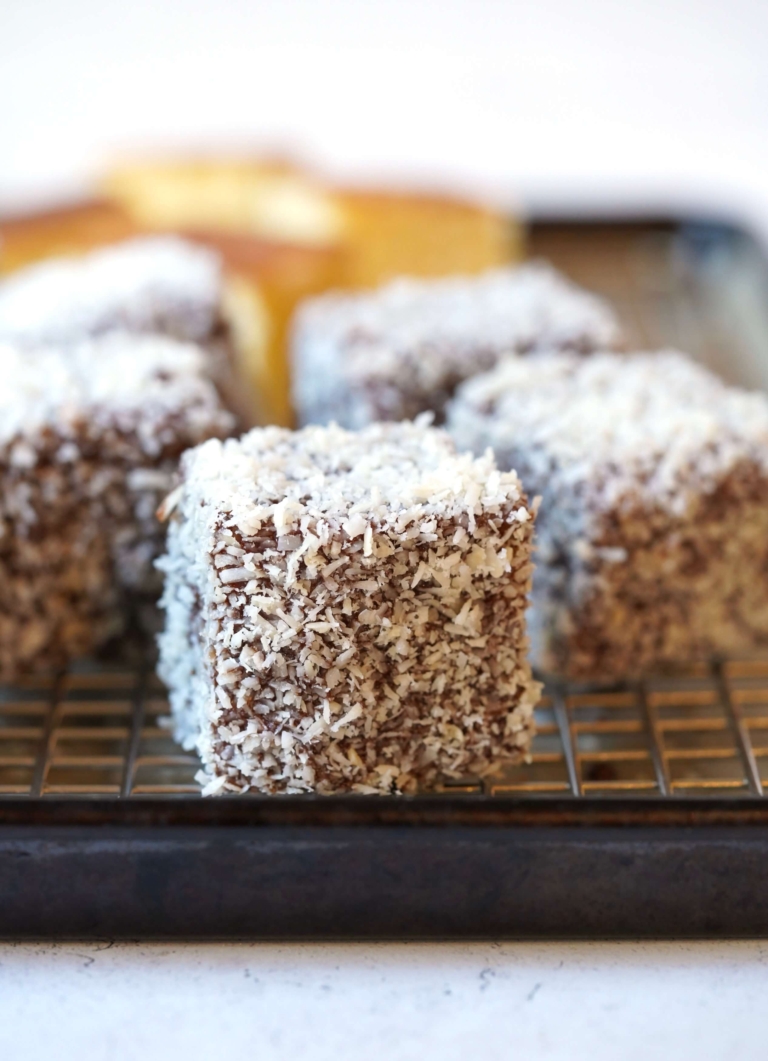
Mastering lamingtons at home takes a few insider tricks:
- Cream the butter and sugar until pale and fluffy to create a light, tender sponge.
- Avoid overmixing once the flour is added—this can make the cake tough and dense.
- Chill the cake overnight before slicing + coating. A firm sponge is easier to handle and less likely to crumble.
- Trim the edges so every side absorbs the chocolate evenly.
- Dip quickly a brief dunk in the chocolate keeps the cake from becoming soggy.
- Use a serrated knife for clean, even cuts without tearing the sponge.
Variations
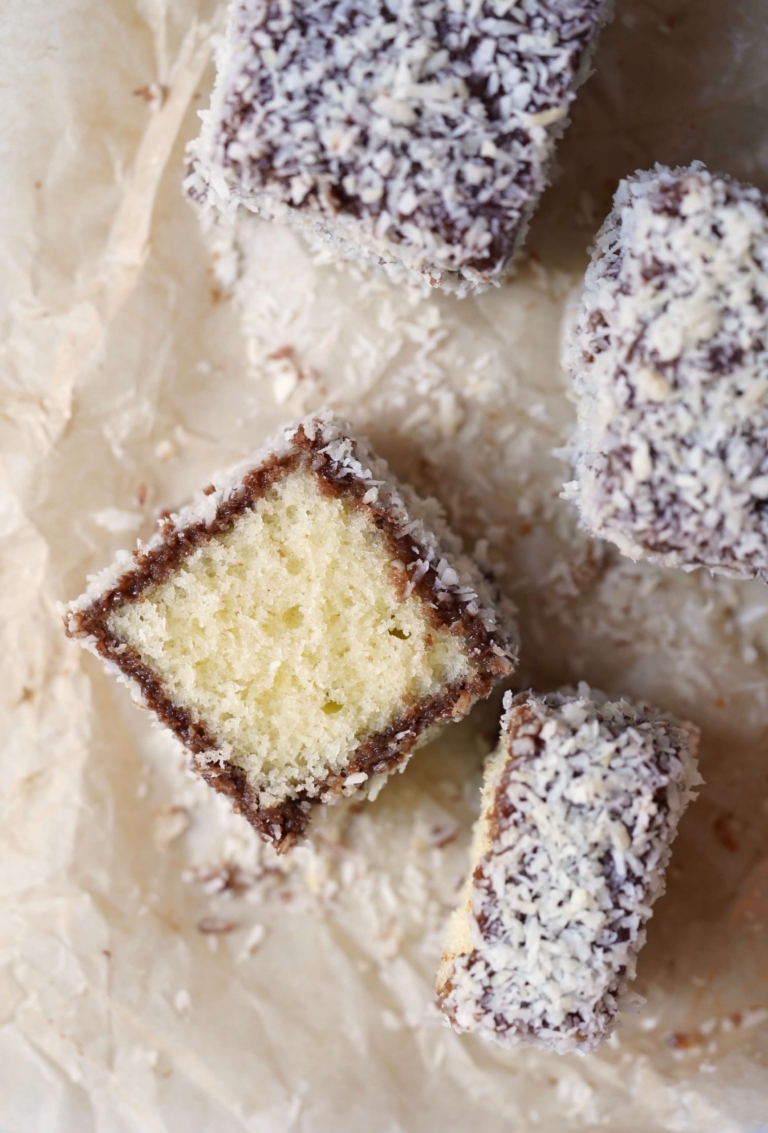
Want to get creative? Try these tasty lamington twists:
- Chocolate sponge instead of vanilla for a double-chocolate version.
- Lemon curd or passionfruit jam for a tropical twist.
- Dip in white chocolate before rolling in coconut for a wintery “snowball” version.
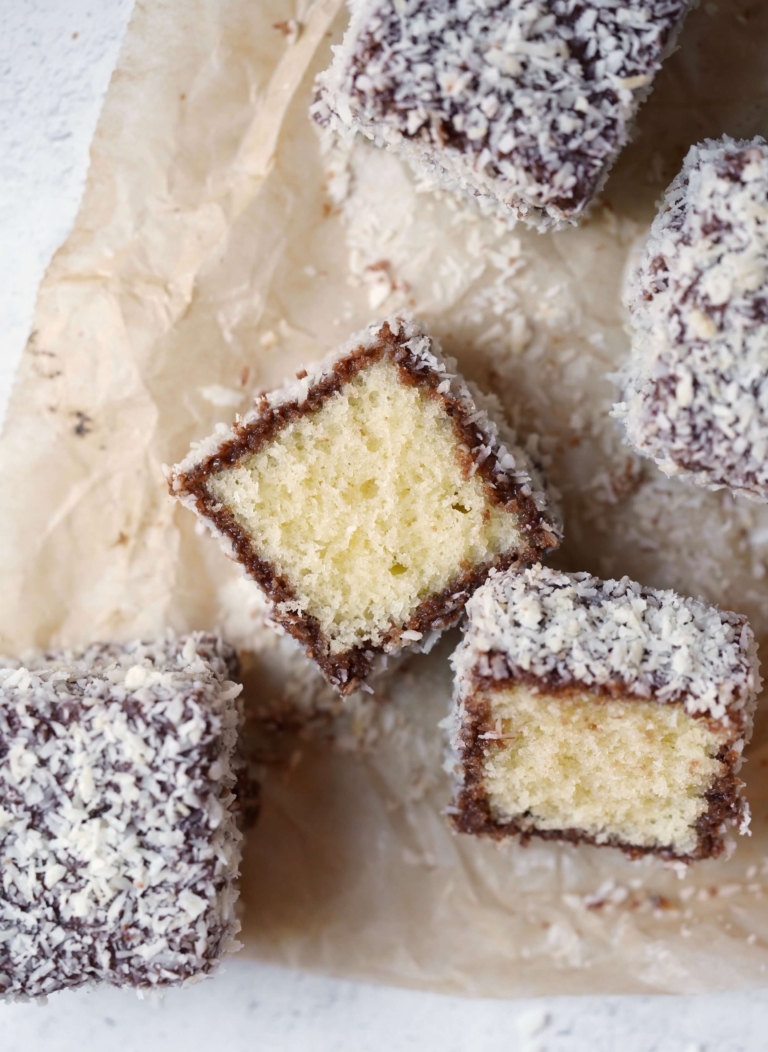
Whether you stick with the classic version (my favorite) or explore one of the many creative variations, lamingtons are a coconut lover’s dream—soft, sweet, and satisfyingly nostalgic. They strike the perfect balance between simplicity and indulgence, making them a welcome treat for nearly any occasion. So while July 21 may be their official day of celebration, there’s truly no wrong time to whip up a batch and enjoy this irresistible Aussie delight. Morning tea, afternoon snack, or dessert—lamingtons always rise to the occasion.

Lamingtons

Ingredients:
For the cake:
- 1 1/4 cup all-flour
- 2 teaspoons baking powder
- 1/3 cup cornstarch
- Pinch of salt
- 1 cup unsalted butter, softened
- 1 cup sugar
- 3 teaspoons vanilla extract
- 3 eggs
- 1/2 cup whole milk
For the Chocolate Sauce:
- 3 2/3 cup Confectioners' sugar, sifted
- 4 ounces bittersweet or dark chocolate
- 1 tablespoon unsalted butter
- 1/3-1/2 cup whole milk
- 12 ounces unsweetened shredded coconut
Directions:
- For the Cake: Preheat the oven to 350 degrees F. Line an 8x8 baking pan with parchment paper, lightly oil, and set aside.
- In a medium mixing bowl, sift the flour, baking powder, cornstarch, and salt. Blend well to incorporate and set near your work station.
- In the bowl of a kitchen mixer, such as a KitchenAid, fitted with a paddle attachment, add the butter and sugar and beat on medium-high until pale yellow. Add the vanilla and eggs and blend well. The mixture may look slightly curdled; that is ok. With the mixer on low, slowly add the flour mixture and milk, alternating. Mix well to incorporate. Increase the speed to high until the mixture looks fluffy and has slightly increased in volume. You should have a thick, pale yellow mixture.
- Pour the cake mixture into the prepared baking pan. Use a rubber tip spatula to flatten the top as best as possible. Place the cake in the oven and bake for about 25-30 minutes, or until a cake tester comes out clean.
- Remove the cake from the oven and allow to cool for about 5 minutes. Carefully turn the cake upside down onto a wire rack to cool further. The bottom of the cake should now be facing up. This will help flatten the top of the cake while cooling.
- Once the cake is cool, use a serrated knife to trim the edges. Next, cut the cake into 16 equal squares.
- For the Chocolate Sauce: Melt the butter and chocolate over low heat in a bain-marie (or a bowl over a pan of simmering water). Add the Confectioners' sugar and whisk in the 1/3 cup milk until you have a thick, but smooth mixture. The sauce needs to be thick enough to coat the cakes, but runny enough to only leave a light coating. Leave the bain-marie on the stove over very low heat.
- To Assemble: Pour the coconut onto a large plate and place near the chocolate sauce. Use a pastry brush to brush the cakes with chocolate sauce on all sides. Allow any excess chocolate to drain off.
- Next, roll the chocolate-coated sponge in the coconut to cover completely. Place the coated lamington on a wire rack to dry. Repeat with the remaining cake pieces. If the chocolate becomes too thick, whisk in milk to thin it out.
- Let the lamingtons set on a wire rack for about 30-60 minutes. Store in an airtight container on the counter.