
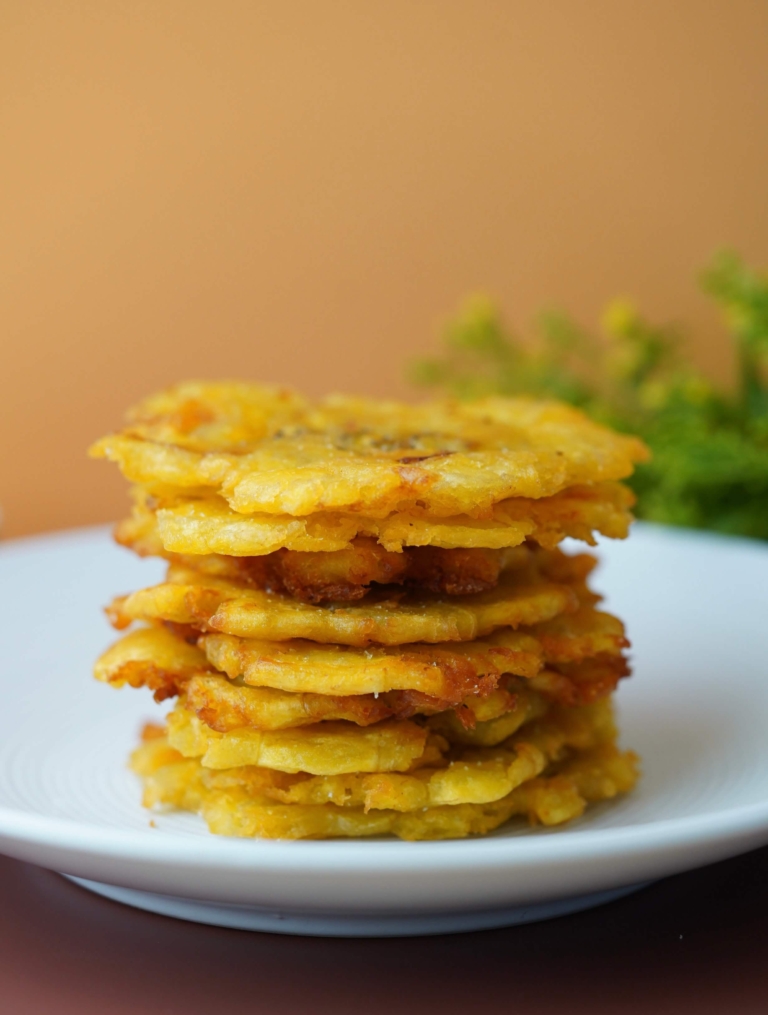
Some souvenirs collect dust. Others find a permanent place in your kitchen. Our family trip to Colombia this summer was filled with colorful streets, endless cups of exceptional coffee, and more memorable meals than I could count. But among all the incredible dishes we tried, one humble staple quickly became an obsession: patacones. Crispy, golden, impossibly satisfying, and somehow able to make just about anything on the plate taste even better, these twice-fried plantains became a regular part of our travels. By the time we returned home, recreating them was a must. Sometimes the simplest foods tell the best stories, and patacones are proof that you don’t need a long ingredient list to make something unforgettable.
What are Patacones?
Patacones, also known as tostones in many other parts of Latin America and the Caribbean, are thick slices of green plantains that are fried once until tender, gently flattened, then fried a second time until irresistibly crisp. The result is a crunchy exterior with a soft, creamy center that makes them nearly impossible to stop eating. In Colombia, patacones are found everywhere—from casual roadside food stalls to family dinner tables and upscale restaurants. They’re less of a side dish and more of a way of life.
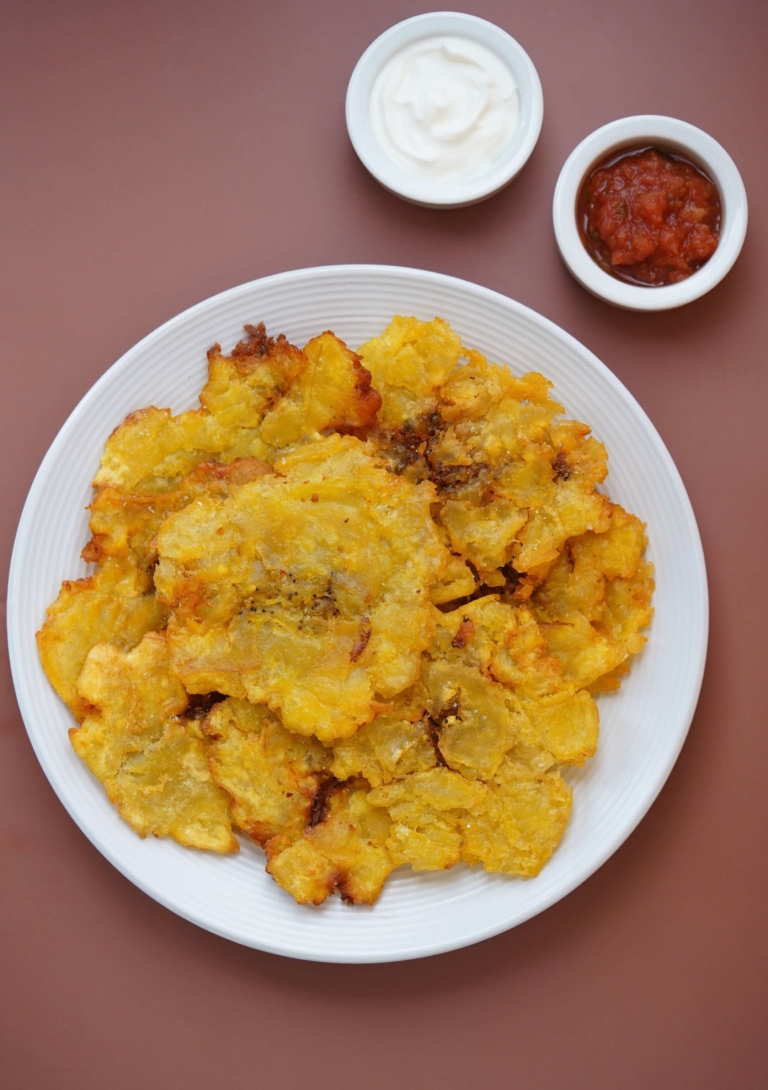
A Little History
While Colombia has embraced patacones as one of its signature foods, the dish has roots across tropical Latin America. Spanish and Portuguese traders brought plantains to the Americas from Southeast Asia and West Africa during the colonial period. Because plantains thrive in warm, humid climates, they flourished throughout the Caribbean and northern South America, eventually becoming a dietary staple.
As the fruit became more widely cultivated, cooks discovered that firm, green plantains were perfect for frying. The technique of frying, smashing, and frying again evolved over generations and spread throughout countries like Colombia, Ecuador, Venezuela, Panama, Cuba, Puerto Rico, and the Dominican Republic. While every region has its own name and slight variation, the idea remains beautifully simple—and delicious. The better question might be: when aren’t they?
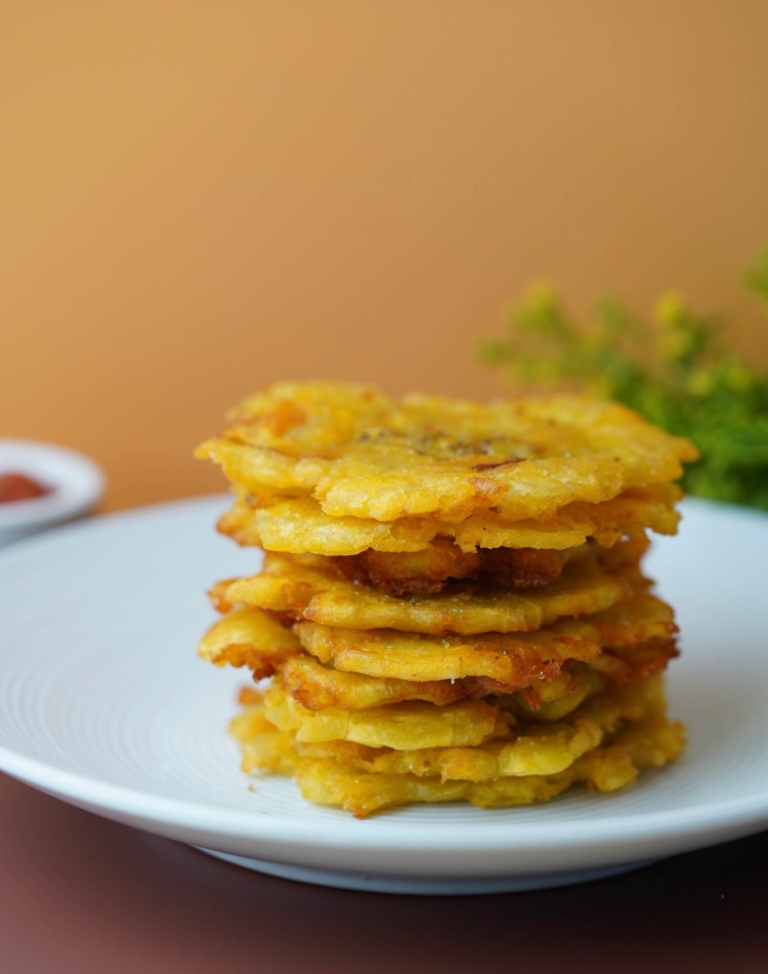
In Colombia, patacones are enjoyed throughout the day. They appear alongside grilled meats, roasted chicken, fresh seafood, pulled pork, and hearty bean dishes. They’re often served with coconut rice, avocado, or simple salads, but they’re equally delicious piled high with toppings as a shareable appetizer. Many restaurants pair them with fresh guacamole, hogao (a traditional Colombian tomato and onion sauce), garlic aioli, or spicy salsa or their equivalent of sour cream. They’re wonderfully versatile and equally at home as a snack, side dish, or even the foundation for a loaded meal. Personally, I could happily eat them straight from the pan with nothing more than a sprinkle of flaky sea salt.
Plantains
If you’ve ever mistaken a plantain for an oversized banana, you’re certainly not alone. They may look similar, but they behave very differently in the kitchen. Plantains are members of the banana family, but they’re starchier, less sweet, and almost always cooked before eating. Although they fall in the fruit category, in the culinary world, they are treated more like a vegetable. Native to Southeast Asia, they spread throughout Africa centuries ago before eventually making their way to the Caribbean and Latin America, where they’ve become one of the region’s most important staple foods.
One of the things I love most about cooking with plantains is that they’re essentially two completely different ingredients depending on their stage of ripeness. Green Plantains are firm, starchy, and mildly flavored, making them ideal for savory dishes like patacones. Their low sugar content allows them to crisp beautifully when fried, creating that signature crunchy exterior.
Ripe Plantains, on the other hand, develop black-speckled or nearly black skins as they mature. Inside, the flesh becomes naturally sweet and soft, caramelizing beautifully when baked, grilled, or fried. In many Latin American cuisines, sweet fried ripe plantains are served alongside savory dishes, creating the perfect balance of sweet and salty. The key is choosing the right plantain for the recipe. Reach for green when you want crisp texture and savory flavor; save the ripe ones for desserts or sweeter side dishes.
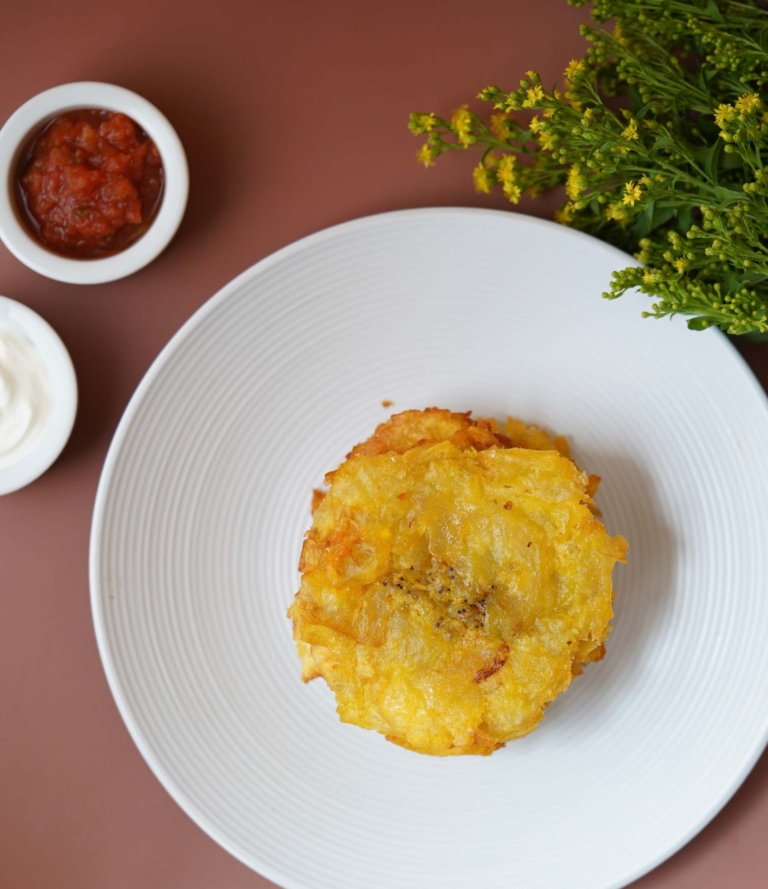
Why You’ll Love This Recipe
Patacones check all the boxes. They’re naturally gluten-free, wonderfully crispy, incredibly versatile, and surprisingly easy to make at home. Whether served beside grilled steak, tucked under shredded chicken, dipped into guacamole, or simply enjoyed fresh from the fryer, they bring a little bit of Colombia to every table.
They also happen to be one of those recipes that remind me exactly why I love traveling. Sometimes it’s not the famous landmarks that stay with you. Sometimes it’s a plate of perfectly crispy fried plantains enjoyed halfway around the world that follows you home and earns a permanent spot in your recipe collection.
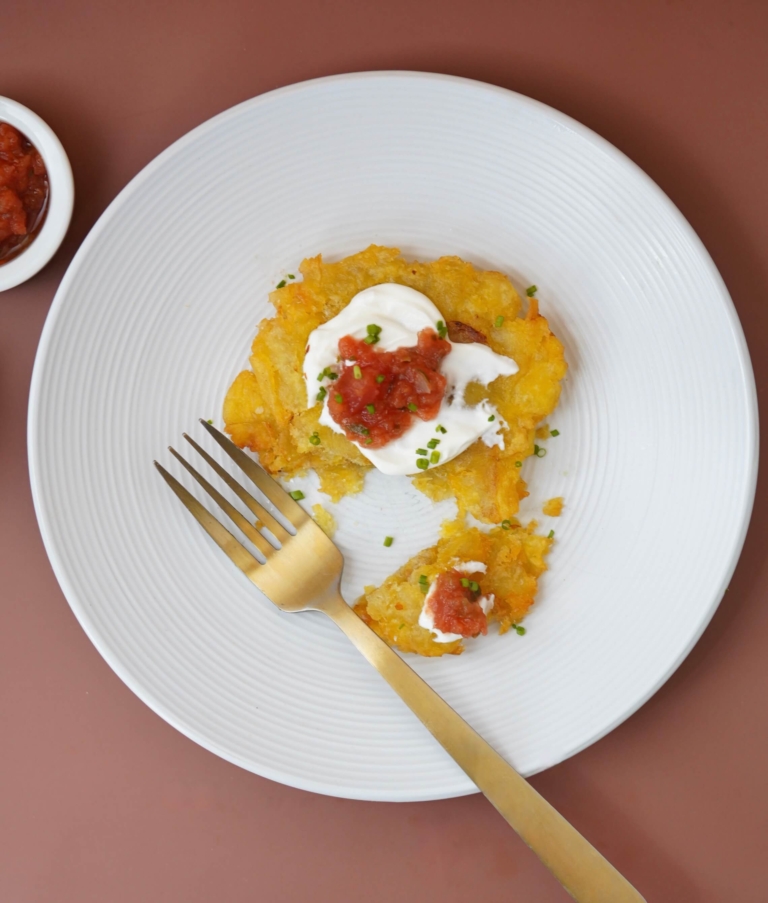
Colombian Fried Plantains "Patacones"

Ingredients:
Directions:
- Line a plate with a double layer of paper towels and set it near your workstation.
- For the First Fry: Heat the oil in an 8 or 10-inch skillet over medium heat. When the oil shimmers, carefully add the sliced plantains and fry, rotating once, for 3 minutes. Using tongs, carefully transfer them to the paper-towel-lined plate and allow to cool slightly. Set the oil aside for the second fry.
- To Flatten the Plantains: Lay two 12-15-inch pieces of parchment paper - one on top of the other - on your kitchen counter. Place one fried plantain between the layers, centered. Holding a cutting board with both hands, place it over the plantain - centered - and press down firmly to flatten the plantain to a thinness of about1/8-inch. Open the top layer of plastic and then reach under the bottom layer of plastic to lift the plantain so you can gently remove it and transfer it to a plate. Repeat the process, one plantain at a time. (Note: if you have a tortilla press, you can use that instead of flattening them by hand.
- Line a second plate with a double layer of paper towels and set it near your workstation. Just before serving, heat the reserved oil over medium heat until shimmering. Fry the flattened plantains, 3-4 at a time, for 3 minutes, carefully flipping them over with a metal spatula. Drain on the prepared plate. Repeat the above process until all the plantains are double-fried. Sprinkle the plantains with salt and serve immediately with salsa, sour cream, or guacamole, if using.